Translate

Thursday, 7 April 2016

AR Verb Conjugation ( grade 7)

AR Verb Conjugation 
 5 April- 15th April , 2016

Objective

At the end of the lesson students will be able to: 
lConjugate regular –AR verbs 
lIdentify a verb in English and in Spanish
lKnow the placement of each subject pronoun on the verb chart
llearn subject pronouns in Spanish
lbecome familiar with a number of AR verbs that are used daily
l use present tense verbs in a sentence successfully.


How to conjugate the Verb.

Look at the table below carefully; we must drop the AR ending of each verb and add the appropriate new ending according to the subject pronoun. 
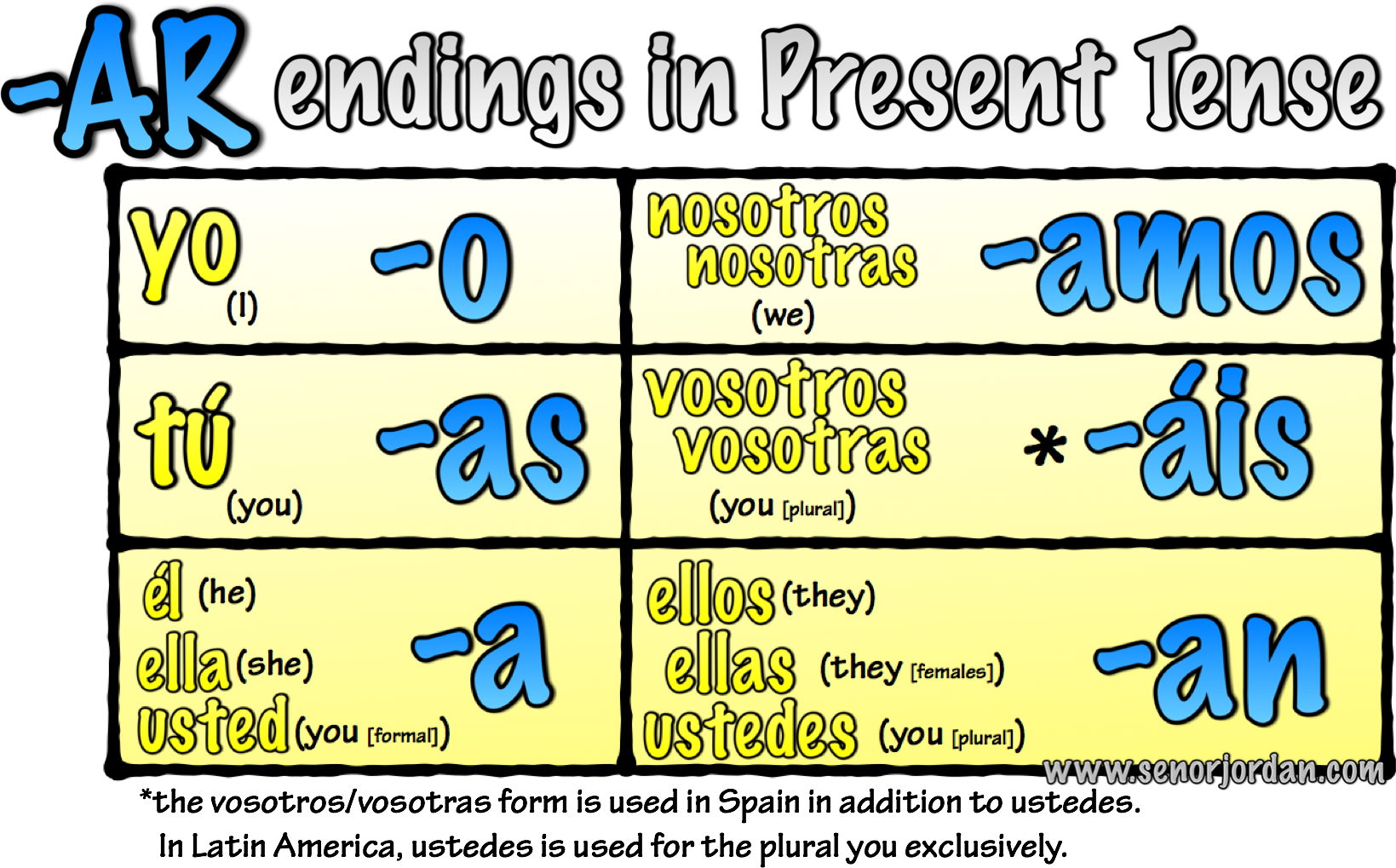


Lets look at the verb Caminar which mean to walk

 I walk to School -  yo camino a la escuela. 
You walk to School- tu caminas a la escuela
He walks to School- El camina a la escuela
We walk to school- Nosotros caminamos a la escuela
They (males) walk to school- Ellos caminan a la escuela

Note: El, Ella & Usted  have the same ending "a" 
          Ustedes, Eloos & Ellas have the same ending "an" 

Click here to view  Top 100 Regular Spanish Verbs


Videos explaining the conjugation of Regular "AR" present verbs in Spanish


Acids and Bases SBA

Topic: Acid and Bases

Date: 5th April, 2016

Aim: to identify common household substance which are acids or bases

Background information/
Explain what is acid, how an acid can be identified, what are the properties of an acid, outline examples of acids found in the lab and nature. 

Explain what is a base, how an base can be identified, what are the properties of an base, outline examples of bases found in the lab and nature. 

Click to see resourceful information on Acids and Bases

Materials/ Apparatus: Litmus, petri dish, measuring cylinder, paper, vinegar, water, soft drinks, bleach and lemon juice.

Experiment Method:
1. Measure 2 ml of the liquid substance in the measuring tube.
2. Transfer the substance in the petri dish
3. Place the red litmus paper in the substance, then observe and record your findings.
4. Repeat step three (3) using the blue litmus paper.
5. Repeat steps one through four (4) for the other substances.
6. Draw and label the observations.
7. You may take pictures of the results.

Observations: 

Analysis and Evaluation: